Who stays behind
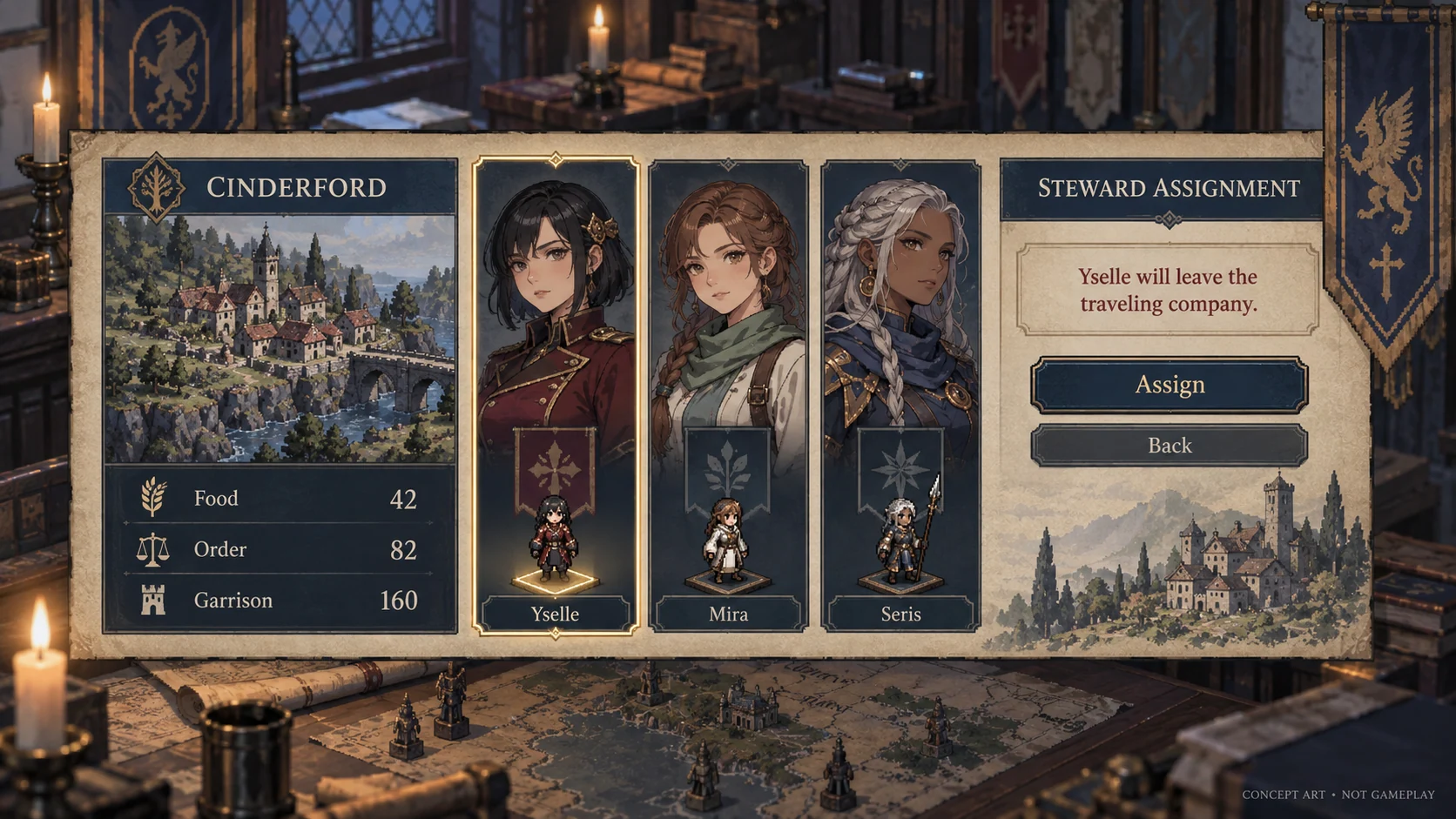
Working design. New events, appearances, mechanics, and political details remain proposals. See canon ledger.
The next chapter begins with a victory's unglamorous obligations. There are prisoners to feed, families to notify, repairs to prioritize, and a garrison whose courage exceeds its training. The player chooses a steward or companion to remain in Cinderford. That person is absent from Pyrrhus's next battle. A trusted fighter may be an excellent governor but also the only experienced healer or defender in the traveling company. The decision gives the strategic layer an emotional cost.
Mira proposes converting an abandoned tollhouse into a field station. The council prefers rebuilding the mill first. Both positions are reasonable. The player can obtain timber through negotiation, labor, or a raid on seized supplies; each uses time that other factions will also use. Neighboring villages begin sending requests, and Pyrrhus must establish a policy for accepting commitments instead of saying yes to everyone.
A captive from Whitebridge requests a hearing. He admits fighting for money but claims he was told the prince had already escaped. Some survivors demand his execution. Halven wants him held as a witness. The public hearing becomes an early test of whether a council can disagree with Pyrrhus without being treated as disloyal. A harsh sentence may calm one group and frighten another. Releasing him without restitution can feel like mercy purchased with someone else's losses.
The province responds through people as well as numbers. The miller's surviving apprentice volunteers if the company protected the workers. A bereaved ferryman refuses service if Pyrrhus dismissed the hearing. These consequences should remain understandable. The player is managing relationships and material conditions, not guessing at a hidden morality score.
Source document: 06-expanded-storyline.md